

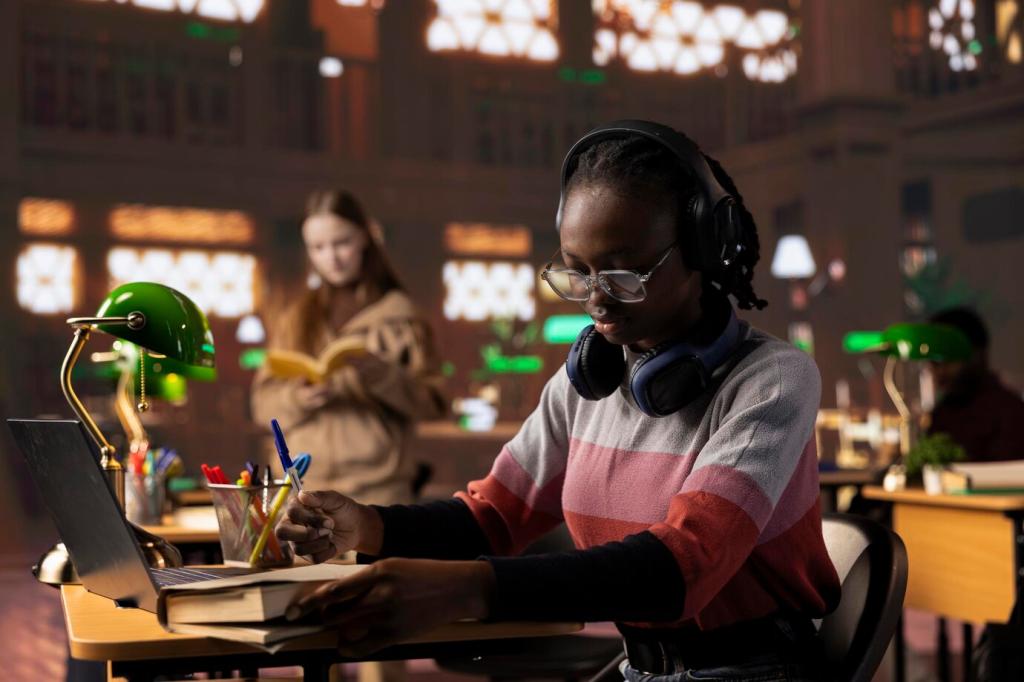



The Future of Education: Digital Learning Spaces

Chosen theme: The Future of Education: Digital Learning Spaces. Step into a world where classrooms stretch beyond walls, communities thrive across time zones, and technology amplifies human curiosity. Read, comment, and subscribe to help shape what comes next.

From Classrooms to Clouds: What Digital Learning Spaces Mean

A digital learning space is a flexible environment where learning flows across platforms, devices, and moments. It unites content, discussion, assessment, and support, empowering learners to interact, reflect, and create beyond rigid schedules or geographic boundaries.

Designing Human-Centered Virtual Classrooms

Create rituals that signal presence: welcome threads, learner name badges, quick check-ins, and mentor office hours. Combine asynchronous introductions with periodic live moments to build trust, and encourage small-group circles where quieter voices can confidently emerge.

Designing Human-Centered Virtual Classrooms

Design for everyone from the start: captions, transcripts, readable contrast, keyboard navigation, and flexible pacing. Offer downloadable resources, multiple formats, and low-bandwidth alternatives. Invite learners to report barriers early, and iterate visibly on their feedback.

The Toolkit Behind Effective Digital Spaces

Learning Management as the Backbone

An LMS organizes content, schedules, and assessments, but its power emerges when paired with clear pedagogy. Use modules that map to outcomes, rubrics that demystify expectations, and discussion prompts that spark authentic inquiry rather than rote replies.

Collaborative Canvases and Studios

Shared documents, whiteboards, and multimedia studios turn passive consumption into co-creation. Encourage teams to storyboard projects, critique drafts respectfully, and document decisions openly. The artifact trail becomes an invaluable record of thinking, feedback, and growth.

Interoperability and Data Portability

Choose tools that talk to each other using open standards, reducing learner friction and manual duplication. Prioritize exportable portfolios so achievements travel beyond a single platform, supporting applications, careers, and lifelong learning transitions with dignity and continuity.

Assessment, Feedback, and Trust

Formative Over Punitive

Shift from surprise grades to continuous insight. Use low-stakes quizzes, quick reflections, and draft submissions that surface misconceptions early. Clear rubrics guide improvement, while revision windows honor learning as an iterative, hopeful process rather than a one-shot performance.

Equity, Access, and Well-Being

Adopt offline-first options, lightweight pages, and downloadable packets. Provide flexible submission windows and mobile-friendly experiences. Offer campus or community pickup points for devices and materials. Ask learners about constraints early and adapt policies to realities, not ideals.

Equity, Access, and Well-Being

Allow learners to choose formats—video, essay, prototype, or infographic—aligned to shared outcomes. Flexibility respects strengths without lowering standards. Provide exemplars and clarity, then celebrate diverse demonstrations of mastery through showcases and learner-led reflections.


Future Horizons: XR, AI, and Simulated Practice

Extended reality can simulate labs, fieldwork, or performances where real-world risk is high. Define clear outcomes, provide accessibility alternatives, and debrief experiences thoughtfully. Solicit learner reflections to track transfer from simulation to authentic practice.

Future Horizons: XR, AI, and Simulated Practice

Use AI assistants to brainstorm outlines, generate practice questions, or translate feedback into actionable steps. Keep educators in the loop, disclose usage, and teach verification habits. Encourage learners to post examples of AI-aided drafts and discuss ethical boundaries.
Nordqvistquality
Privacy Overview

This website uses cookies so that we can provide you with the best user experience possible. Cookie information is stored in your browser and performs functions such as recognising you when you return to our website and helping our team to understand which sections of the website you find most interesting and useful.